24/7 Emergency
Restoration Services
in Dallas–Fort Worth
Fast, professional help with water damage, fire damage, smoke cleanup, mold remediation, storm damage, junk removal, renovation and emergency property cleanup. One call, day or night — our line is answered 24 hours a day.
- Available 24 hours a day, seven days a week
- Licensed & insured technicians
- Residential & commercial across DFW
- Insurance claim documentation included
Tap to call. Open 24 hours, 365 days a year.
Call NowOpens your email app with the details we need already listed. For active water, fire, storm or sewage emergencies, calling is the fastest way to reach our team.
What happens when you call
- 1We work out what you are dealing with. The address, what has happened, and whether anyone is at risk.
- 2You get told what to do right now. Shut off the water, stay clear of an area, photograph before you move anything — on that call, not later.
- 3We give you a realistic arrival window for your address, and a free written estimate once we have seen the property.
- Locally owned, based in Dallas
- Licensed & insured
- Residential & commercial
- Free estimates
Whatever happened, we handle all of it
Water, fire, smoke, mold and storm damage — plus the haul-off, storage and rebuild work that follows. One company, one point of contact, from the first call to the final walkthrough.
Water Damage Restoration
Burst pipes, failed water heaters, overflowing appliances and slab leaks. We extract standing water, pull moisture out of the structure and document every reading for your claim.
Learn moreFire & Smoke Damage
Board-up, soot and char removal, smoke odor neutralization and structural cleaning — then the rebuild that makes the house feel like yours again.
Learn moreMold Remediation
Containment, HEPA filtration and safe removal of affected materials, followed by the moisture correction that keeps mold from returning.
Learn moreStorm & Wind Damage
North Texas hail, straight-line winds and roof failures. Emergency tarping and board-up first, water mitigation second, full repair third.
Learn moreFlood Cleanup
Rising water, sewer backups and category 3 contamination handled with the right PPE, antimicrobials and disposal — not a shop vac and a fan.
Learn moreJunk Removal & Haul-Off
Ruined furniture, demo debris, garage cleanouts and estate clear-outs. Loaded, hauled and disposed of so the property is workable again.
Learn moreRenovation & Rebuild
Drywall, flooring, cabinetry, paint and trim. One company from the first wet-vac to the final walkthrough, so nothing falls between contractors.
Learn moreStorage & Moving
Pack-out, inventory and secure storage for contents that need to leave the property while the work happens — then moved back in when it is done.
Learn moreBuilt for the worst day of your year
Restoration is not really a construction service. It is an emergency service that happens to involve construction — and everything about how we operate reflects that.
Answered 24/7, by a person
No answering service, no callback queue. Nights, weekends and holidays included, because that is when pipes actually fail.
Dispatched from inside DFW
We are based on Topline Drive in Dallas and cover 29 cities across the Metroplex. Crews are routed from the closest available team, not from another state.
Licensed and insured
Full liability coverage and workers' compensation on every job. Certificates are available before we start work — just ask.
We speak insurance
Moisture maps, photo logs, daily drying records and line-item documentation formatted the way adjusters expect to receive them.
Locally owned, not a franchise
Owner AJ Alqraini answers for the quality of every job. You are dealing with the person whose name is on the truck.
Commercial-grade equipment
Truck-mounted extractors, LGR dehumidifiers, air movers, HEPA air scrubbers, thermal imaging and penetrating moisture meters.
Mitigation through rebuild
Most companies dry it out and hand you a contractor list. We carry the job through demolition, repair and final finish.
Satisfaction guaranteed
We are not finished until the moisture readings are dry, the air is clean and you have signed off on the work.
Eight steps, in this order, every time
Restoration goes wrong when steps get skipped to save a day. This is the sequence we follow on every loss, and you will know exactly which step you are on.
Emergency call
You call, we pick up. We capture the address, the source, whether utilities are safe, and route the nearest crew.
MinutesOn-site inspection
Technicians locate the source, stop the intrusion where possible, and walk the property with you.
On arrivalDamage assessment
Thermal imaging and moisture meters map how far water travelled, including behind walls and under flooring.
Hour oneWater extraction
Truck-mounted and portable extractors remove standing water and saturated contents before secondary damage sets in.
Day oneStructural drying
Air movers and LGR dehumidifiers are placed to a calculated load and monitored daily against target readings.
Days 2-5Cleaning & sanitizing
Antimicrobial treatment, HEPA filtration, contents cleaning and odor neutralization throughout the affected area.
During dryingRepairs & rebuild
Drywall, insulation, flooring, cabinetry, trim and paint restored to pre-loss condition or better.
After dry-outFinal walkthrough
We verify readings, review the documentation package with you, and do not close the job until you sign off.
CompletionYour claim is only as strong as its documentation
Most claim disputes are not really disagreements about coverage. They are disagreements about evidence — what was wet, how wet, for how long, and what it cost to fix. We capture that from the moment we arrive.
- Dated photo documentation of every affected area, before work begins
- Moisture maps and daily drying logs with equipment counts
- Line-item scopes written in the format adjusters expect
- Direct communication with your adjuster, including on-site meetings
- Direct insurance billing available on most covered losses
- A complete closing package for your records when the job is done
What to do in the first hour
- Make it safe. If water is near outlets or panels, stay out and let us handle it. Never enter a fire-damaged structure before it is cleared.
- Stop the source. Shut off the fixture valve, or the main if you cannot isolate it.
- Call us. The clock on secondary damage starts immediately — mold can begin within 24 to 48 hours.
- Photograph everything. Wide shots and close-ups, before anything is moved.
- Notify your carrier. Open the claim early; you can add detail later.
- Do not throw anything away. Damaged items are evidence until they have been documented.
Not sure whether it is an emergency? Call anyway. We would rather talk you through a small leak than meet you after it became a big one.
From standing water to finished room
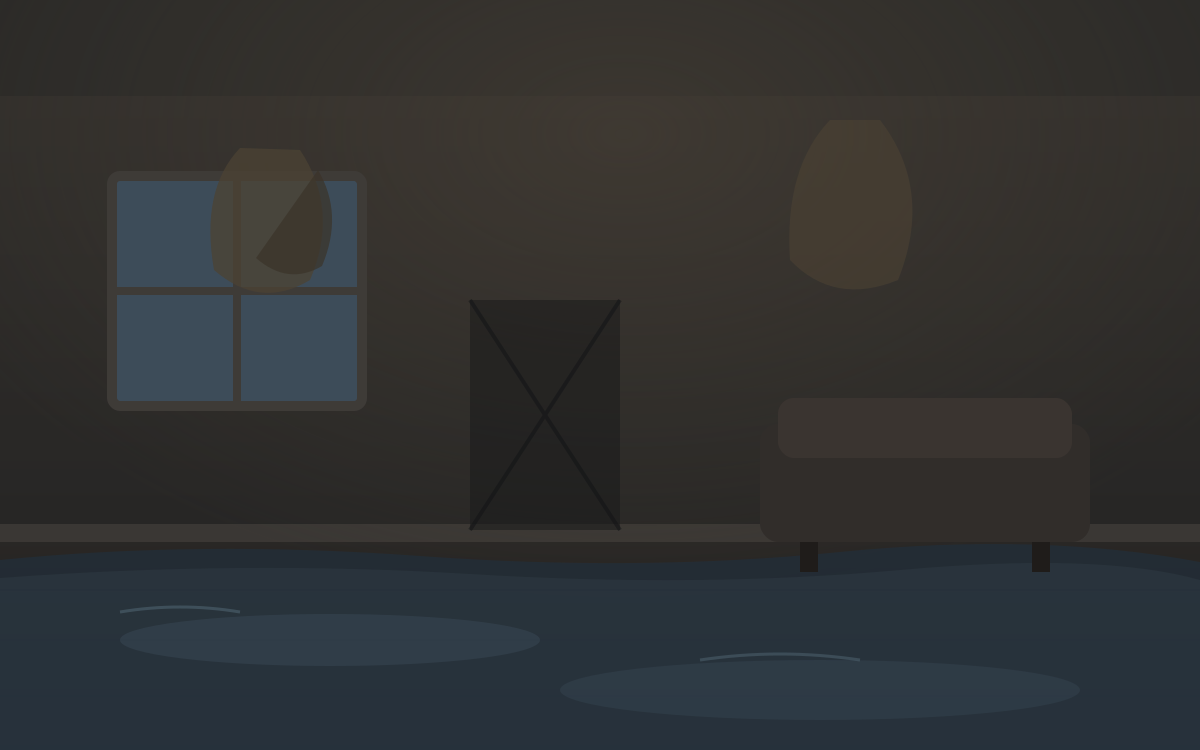
Drag the handle to compare. This is an illustration of the two ends of a water-damage job — extraction and structural drying on one side, the completed rebuild on the other. Photographs from our own projects will replace it as they become available.

What to expect when you call us
We would rather tell you exactly how we work than show you testimonials you have no way of verifying.
A person answers, at any hour
Our line is answered 24 hours a day, seven days a week. You will not be routed to voicemail or an answering service that takes a message and calls someone else. Tell us the address and what has happened and we will talk you through what to do in the next ten minutes.
A free estimate before work begins
We assess the property, explain what we have found in plain language, and give you a written estimate at no cost. You will know the scope and what it involves before anyone starts, and nothing outside that scope proceeds without your approval.
Licensed, insured and locally owned
We are based at our facility in Dallas and we work across the Metroplex. That means the company that quotes the job is the company that does it, and we are still here afterward if something needs attention.
Your property treated carefully
Containment where it is needed, protected walkways, equipment placed with the household in mind, and the site left clean at the end of each day. Contents are documented before anything is moved.
Clear communication throughout
One point of contact for the whole job. You are told before anyone arrives, what is happening that day, and immediately if we find something that changes the scope — not at the end when it appears on an invoice.
Residential and commercial
Houses, apartments and HOA common areas, alongside offices, retail, restaurants and warehouse space. Mitigation through to the finished rebuild, so nothing falls into the gap between contractors.
What actually causes property damage in DFW
Restoration is a seasonal trade. After enough years working the same metro area, the calendar becomes fairly predictable — and most of it is preventable if you know what to watch.
Winter — hard freezes
Attic and exterior-wall supply lines are the most common failure in DFW, because so much local plumbing runs through unconditioned space. A pipe freezes, a plug of ice pressurises the line, and it splits — often bursting the following morning as it thaws. Hose bibs, pool equipment and vacant properties with the heat turned off are the usual casualties.
Spring — hail and wind
The Metroplex sits in an active hail corridor from roughly March through May. Roof bruising is frequently invisible from the ground; the reliable tell is dented soft metal — gutters, vents, air-conditioner fins. Wind breaks the seal between shingle courses, and the leak arrives weeks later.
Summer — heat and HVAC
Attic temperatures above 140°F are hard on everything up there. Condensate lines clog and overflow through ceilings, drain pans rust through, and water heaters in attic closets fail into the rooms below. Second-storey laundry and supply lines add to it.
Year-round — aging systems
Cast iron drains in homes built before about 1980, polybutylene supply lines from the late 70s to mid 90s, and galvanised steel in pre-1960 properties all fail on their own schedule. So do washing machine hoses, dishwasher supply lines, refrigerator ice-maker lines and toilet supply valves.
The single most effective thing you can do is know where your main water shutoff is and confirm it actually turns, before you need it at 2am. After that, an automatic shutoff valve that closes on abnormal flow costs a fraction of one water loss.
Straight answers, before you have to ask
The questions people call us with at 2am, answered honestly — including the ones about cost.
Our line is answered 24 hours a day and crews are dispatched from inside the Metroplex, so response is measured in the time it takes to drive to you rather than the time it takes to reach a call center. When you call, we will give you a realistic arrival window for your specific address and traffic conditions — and we will tell you exactly what to do in the meantime.
Yes. We document every job the way carriers and adjusters expect: dated photographs, moisture maps, daily drying logs, equipment counts and line-item scopes. We can speak with your adjuster directly, meet them on site, and in many cases bill the carrier so you are only responsible for your deductible. We are not a public adjuster and we do not negotiate your claim for you, but we make sure the physical evidence of the loss is captured properly.
It depends on how much water there was, what it touched, how long it sat and whether it was clean, gray or black water. A small contained laundry-room leak is a very different job from a second-floor supply line that ran overnight through three rooms and a ceiling. Estimates are free, and we walk you through the scope before any work begins. If the loss is covered, your out-of-pocket cost is usually your deductible.
Yes, and quickly. The EPA notes that mold can begin growing on damp materials within 24 to 48 hours. That is why speed matters more than almost anything else in water damage work: fast, complete drying is the most effective mold prevention there is. If materials stayed wet longer than that, we treat mold as a likely condition rather than a possibility and inspect accordingly.
Safety first. If water is near outlets, panels or fixtures, shut off electricity to the affected area only if you can do so safely — otherwise wait for us. Shut off the water supply at the source or the main. Do not walk through standing water in a room with live power, and do not enter a fire-damaged structure until it has been cleared. If it is safe, move small valuables and electronics to a dry area, lift curtains and skirting off wet floors, and start photographing everything for your claim.
Yes. Assessment and estimates are free, with no obligation. For an active emergency we will stabilize the situation first — stopping intrusion and extracting water — and walk the full scope with you once the property is out of danger.
Yes. Emergency restoration is not a business-hours trade. Supply lines fail at night, water heaters go on weekends and storms do not check the calendar. The number on this page reaches us around the clock, every day of the year.
Most residential water losses dry in three to five days, though it varies with the volume of water, the materials affected and the humidity outside. Hardwood, plaster and dense assemblies take longer than carpet and drywall. We set equipment to a calculated load and take moisture readings daily — the job is done when the readings say so, not when the calendar does.
We do both. Many restoration companies stop at mitigation and hand you a list of contractors. We carry the job through demolition, drywall, flooring, cabinetry, trim and paint, which means one point of contact, one scope and no gap between the company that tore it out and the company that puts it back.
We cover 29 cities across Dallas-Fort Worth, including Dallas, Fort Worth, Irving, Plano, Frisco, McKinney, Arlington, Garland, Denton, Grapevine, Southlake and the surrounding communities. If your address is in the Metroplex, call and we will confirm coverage immediately.
It depends on the source. Category 1 is clean water from a supply line. Category 2 (gray water) comes from appliances, washing machines or toilet overflow without solids, and carries contaminants. Category 3 (black water) includes sewage, rising floodwater and any water that has sat long enough to grow bacteria — it requires containment, PPE and disposal of porous materials. We identify the category on arrival because it determines everything about how the job is handled.
Not always. Hardwood that has cupped can often be dried in place with specialty floor drying mats and controlled dehumidification, then sanded and refinished after it stabilizes. Success depends on how long the water sat, what the subfloor is doing and whether the finish trapped moisture underneath. We will tell you honestly which way it is likely to go rather than defaulting to a tear-out.
Yes. Sewage is category 3 contamination and is handled with containment, full PPE, antimicrobial treatment and controlled disposal of affected porous materials. This is not a job for household cleaners or a wet vac — the health risk comes from bacteria and aerosolized contaminants, not just the visible mess.
Often yes, particularly if the loss is contained to one area. It depends on whether the affected area includes a kitchen or the only bathroom, whether there is mold or sewage involved, whether power to part of the home is off, and how much equipment noise you can live with. We will give you a straight answer at the assessment so you can make arrangements early rather than at 9pm.
Air movers and dehumidifiers have to run continuously to hold the drying conditions we set. Turning them off overnight extends the job, and in a bad case it lets microbial growth start. It is loud and it is genuinely inconvenient, but it is the difference between a five-day dry-out and a tear-out.
Yes, and the two usually arrive together — the fire department leaves a lot of water behind. We handle emergency board-up and roof tarping, soot and char removal, smoke odor neutralization, contents cleaning and the full rebuild.
Smoke odor is caused by microscopic residue that settles into porous surfaces and HVAC systems, so masking it never works. Real odor removal means physically cleaning affected surfaces, removing materials that cannot be cleaned, sealing what remains where appropriate, cleaning the duct system, and finishing with hydroxyl or ozone treatment depending on the situation.
Yes. Retail, office, restaurant, warehouse and multi-family properties, including after-hours and phased work so you can keep operating. Commercial losses carry a business-interruption clock as well as a damage clock, and we scope them accordingly.
Board-up secures a property after fire, storm, vehicle impact or break-in: covering broken windows and doors, tarping compromised roofing and closing structural openings. It matters for two reasons — it prevents further weather and intrusion damage, and most policies require you to take reasonable steps to protect the property from further loss.
Yes. Junk removal and debris haul-off is one of our core services and it is often part of a restoration job. Ruined furniture, soaked carpet and pad, demolition debris and contents that cannot be salvaged are documented for your claim first, then loaded and hauled away.
Yes. We handle pack-out with a written inventory, transport, secure storage and move-back once the property is ready. It is the practical answer when the affected area is too large to work around or when contents need cleaning off site.
The industry standard is IICRC certification — specifically WRT (Water Damage Restoration Technician), ASD (Applied Structural Drying) and AMRT (Applied Microbial Remediation Technician) — along with state licensing where required and current liability and workers' compensation coverage. Ask any company you are considering for proof of all of it, including ours, before work starts.
No. Drywall is removed when it is saturated, when it is holding moisture against insulation that cannot dry, when it is contaminated by category 2 or 3 water, or when there is growth behind it. Otherwise we dry it in place. A company that opens every wall by default is either not measuring or is scoping for the invoice.
We stop, contain the area so spores are not spread through the rest of the property, and tell you what we found before we proceed. Depending on the size of the affected area and your carrier's requirements, an independent hygienist may need to test and write a protocol. We will explain what applies to your situation rather than quietly expanding the job.
By measurement, not by feel. We establish dry standard readings from an unaffected area of the same material, then take daily readings from affected materials until they match. Those readings go in your documentation package. If a company cannot show you numbers, they do not know whether the structure is dry either.
29 cities across Dallas–Fort Worth
We dispatch from 4828 Topline Drive in Dallas and cover the Metroplex from Fort Worth to Celina. Tap your city for local response details.
Water doesn't wait. Neither do we.
One call starts the clock. Tell us what happened and we will talk you through the next steps — day, night, weekend or holiday.
(708) 506-8917